
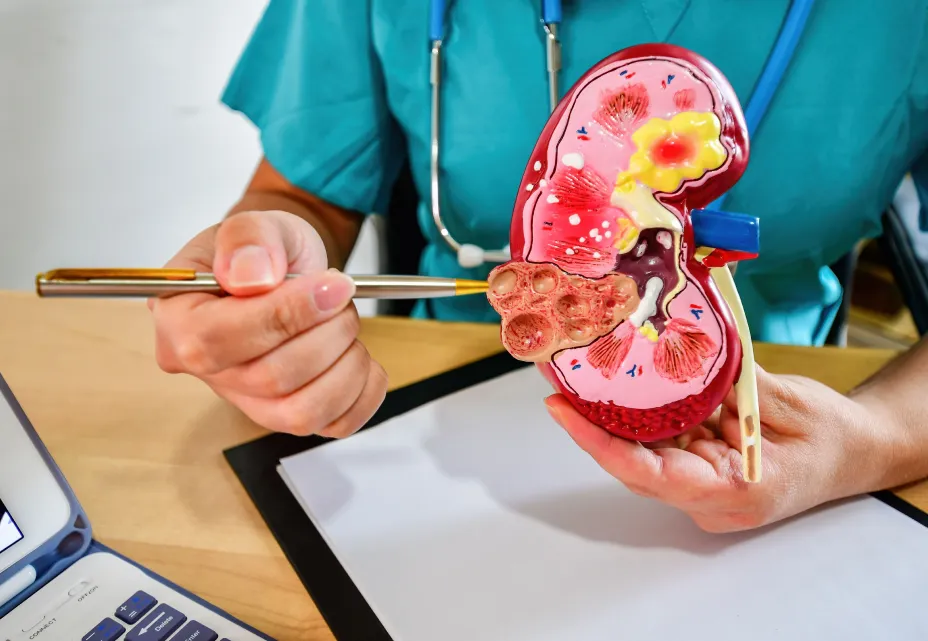
Kidney stones often develop without warning. Knowing what are the first signs of kidney stones helps you seek treatment before a small stone turns into a medical emergency. These hard mineral deposits form inside your kidneys and can stay silent for weeks before moving into your ureter, the narrow tube connecting your kidney to your bladder. Once movement starts, symptoms appear fast and intensify within hours. This guide walks you through the earliest warning signs and when to schedule an appointment with a urologist. Recognising these signals early gives your doctor more options and spares you unnecessary pain.

What Is a Kidney Stone?
A kidney stone is a hard deposit made of minerals and salts. It forms inside your kidney when your urine holds high levels of calcium, oxalate, or uric acid. Small stones often pass out of your body without pain. Larger stones get stuck in your ureter and block the flow of urine, which triggers the sharp pain most people associate with this condition.
What Are the First Signs of Kidney Stones?
The first signs of kidney stones can appear gradually and worsen as the stone moves. Watch for these early symptoms:
- A dull ache in your back or side, below your ribs.
- Pain in your lower abdomen or groin.
- Pain while urinating, often described as a burning sensation.
- A sudden urge to urinate more often than usual.
- Pink, red, or brown urine from blood.
- Cloudy or foul-smelling urine.
- Nausea, with or without vomiting.
These signs of kidney stones often start mild and shift in intensity as the stone travels through your urinary tract. Pain often comes in waves, easing for a while before returning stronger.
How Kidney Stone Pain Feels
Kidney stone pain, known as renal colic, differs from ordinary back pain. It starts suddenly and peaks within minutes. The pain radiates from your side or back toward your lower abdomen and groin as the stone travels down your ureter. Many people describe the pain as sharp, cramping, or stabbing. Unlike muscle pain, it rarely eases with a change in position. If you notice this pattern along with any of the first signs of kidney stones listed above, contact a doctor without delay.
Warning Signs Needing Immediate Medical Attention
Certain symptoms signal a stone is blocking your urinary tract or causing an infection. Seek emergency care right away if you notice:
- Severe pain you cannot sit still through
- Fever above 101°F with chills
- Persistent vomiting
- Blood clots in your urine
- Inability to urinate
- Pain paired with confusion or a rapid heartbeat
An infection behind a blocked stone becomes dangerous within hours. Do not wait for the pain to pass on its own.
What Causes Kidney Stones
Several combined factors lead to kidney stones:
- Low water intake, which concentrates minerals in your urine
- A diet high in sodium, animal protein, or oxalate-rich foods
- A family history of kidney stones
- Obesity or a sedentary lifestyle
- Certain digestive diseases or previous gut surgery
- Recurrent urinary tract infections
How Doctors Diagnose Kidney Stones
Doctors confirm a kidney stone through a mix of tests and imaging, usually in this order:
- A physical examination and review of your symptoms and medical history.
- A urine test to check for blood, infection, or stone-forming minerals.
- A blood test to measure calcium, uric acid, and kidney function.
- An ultrasound or CT scan to locate the stone and measure its size.
Stone size and position decide your treatment path. Stones under 5mm often pass on their own. Larger stones, or those blocking the ureter, need active removal.
Treatment Options for Kidney Stones
Treatment depends on your stone’s size, location, and composition.
- Pain relief and increased fluids for small stones expected to pass on their own.
- Alpha-blocker medication to relax the ureter and help the stone pass.
- Extracorporeal Shock Wave Lithotripsy (ESWL) to break large stones into smaller fragments using sound waves.
- Ureteroscopy (URS) to remove or break stones using a thin scope passed through your urinary tract.
- Percutaneous Nephrolithotomy (PCNL) for large or complex stones, performed through a small incision in your back.
Our urology specialists offer all of these procedures, supported by advanced endoscopic and laser equipment for faster recovery and less discomfort. Learn more about our urology services.
How to Prevent Kidney Stones
Prevention starts with simple daily habits:
- Drink enough water to produce light-colored urine throughout the day
- Reduce salt intake in your meals
- Limit animal protein, including red meat and organ meat
- Cut back on oxalate-rich foods such as spinach, nuts, and chocolate if you have formed calcium oxalate stones before
- Maintain a healthy body weight through regular movement
Hydration remains the strongest defence against stone formation. Research on fluid intake and stone prevention shows higher water intake reduces the risk of both new and recurring stones by close to half.
When to See a Urologist
Do not ignore the first signs of kidney stones, even if the pain fades on its own. Untreated stones lead to repeated infections, kidney damage, or complete blockage of urine flow. Schedule an appointment if you notice recurring back pain, blood in your urine, or pain during urination. Early diagnosis gives you access to less invasive treatment and a faster return to your normal routine.
Conclusion
Kidney stones rarely cause severe pain right from the start, yet a dull backache, painful urination, or blood in your urine deserve attention right away. Acting on these early symptoms protects your kidneys from lasting damage and keeps treatment options simple. At OP Chaudhary Healthcare, our urology and nephrology specialists diagnose and treat kidney stones of every size, using advanced imaging and minimally invasive procedures. Do not wait for the pain to worsen. Contact our team today for expert care and lasting relief.
Book Your Consultation
Experiencing back pain, blood in your urine, or discomfort while urinating? Book a consultation with the urology specialists at OP Chaudhary Healthcare today. Call +91-9517164164 or visit us at Chaudhary Vihar, Raebareli Road, Lucknow, to get an accurate diagnosis and a treatment plan built around your recovery.
FAQs
Do kidney stones cause pain on only one side of the body?
Pain usually starts on the side where the stone sits, in one kidney, then radiates toward the front and groin on this same side.
What is the difference between kidney stone pain and a urinary tract infection?
Kidney stone pain arrives suddenly in sharp waves, often in the back or side. A urinary tract infection causes a burning sensation, frequent urges to urinate, and cloudy urine, usually without the sharp radiating pain of a stone.
Do kidney stones return after treatment?
Recurrence is common. Nearly half of people who form one stone develop another within ten years without dietary changes or preventive care.
How much water should I drink each day to lower my risk of kidney stones?
Aim for enough water to produce about 2 to 2.5 litres of urine daily. For most adults, this means eight to ten glasses of water spread across the day.
Are kidney stones more common in men or women?
Kidney stones affect men more often than women, though the gap has narrowed in recent years due to shared risk factors such as diet and dehydration.