
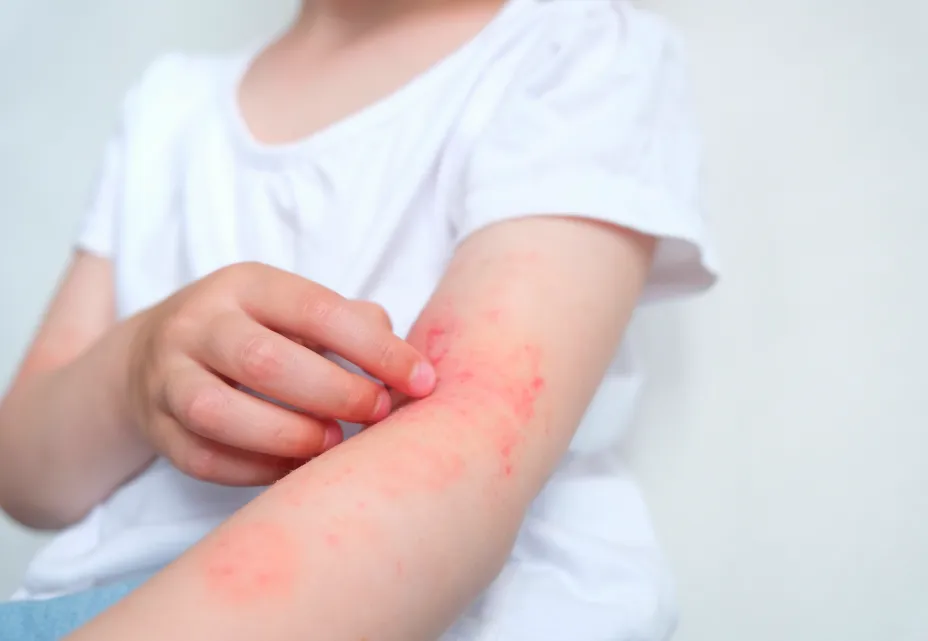
Red, itchy, or swollen skin often signals an allergic reaction. Knowing the types of skin allergies and their triggers helps you act early and protect your health. This blog explains the main reasons behind skin allergies, the role of nutrition, and the practical steps you can take to reduce flare-ups and keep your skin calm and comfortable throughout the year.
What Causes a Skin Allergy?
A skin allergy happens when your immune system reacts to a substance it treats as harmful. This substance, called an allergen, triggers the release of chemicals like histamine. Histamine leads to redness, itching, and swelling. Some people react to a single allergen, while others react to several at once. Your genes, environment, and overall health all influence how strongly your skin responds to a trigger.
The most common reasons behind skin allergies include:
- Contact irritants: Direct contact with soaps, detergents, cosmetics, or metals like nickel can trigger redness, itching, and localised skin irritation.
- Certain foods: Foods including nuts, eggs, shellfish, and dairy may cause hives, itching, swelling, or other allergic skin reactions.
- Medicines: Medicines such as antibiotics and painkillers can cause rashes, itching, swelling, or widespread allergic reactions in sensitive individuals.
- Insect bites: Insect bites and stings may release allergens that cause redness, swelling, itching, hives, or painful skin inflammation.
- Environmental allergens: Pollen, dust mites, pet dander, and mould can trigger itching, rashes, eczema flare-ups, or persistent skin sensitivity.
- Weather and sweat: Extreme heat, cold temperatures, or excessive sweating can irritate sensitive skin and trigger itching, hives, or redness.
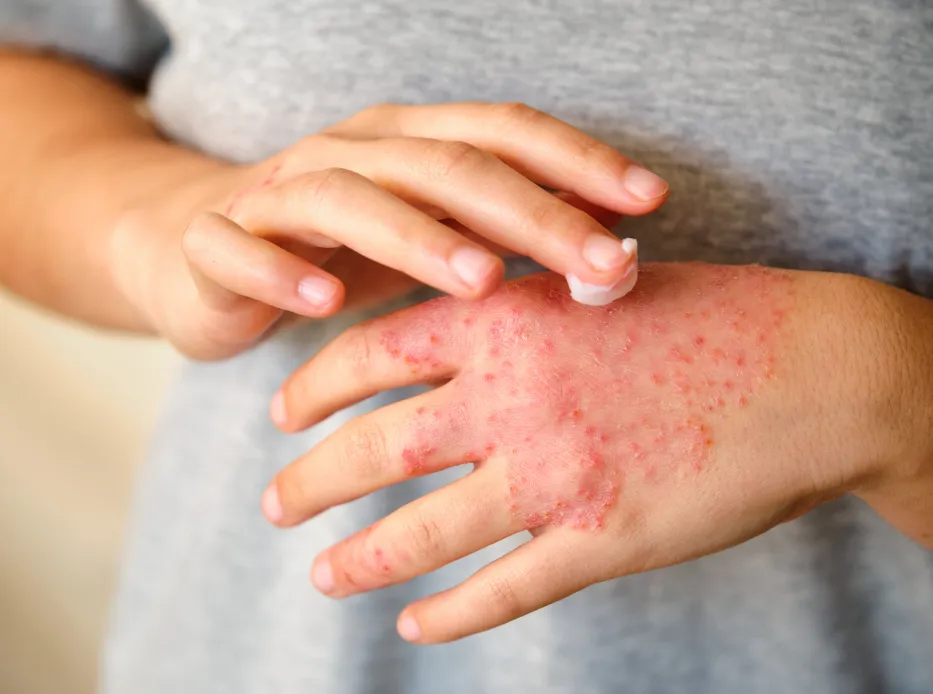
Common Types of Skin Allergy
Doctors group skin reactions into a few main categories. Understanding these categories helps you match your symptoms to the right treatment and avoid future flare-ups.
- Contact dermatitis: Your skin turns red, itchy, and sore after touching an allergen or irritant, such as jewellery, nickel, cosmetics, or cleaning products. Reactions often appear only on the exposed area within hours of contact.
- Atopic dermatitis: You develop dry, itchy, and inflamed patches, often on the hands, elbows, or knees. It appears frequently in people with a family history of allergies, asthma, or sensitive skin.
- Hives: Raised, itchy welts appear suddenly on your skin after contact with food, medicine, heat, or stress. They shift location, fade within hours, and often return in fresh spots across the body.
- Angioedema: Deep swelling forms around your eyes, lips, hands, or feet, often alongside hives. It affects the deeper layers of skin and needs urgent care when it spreads to your throat or tongue.
- Drug rash: A reaction to medication, such as antibiotics or painkillers, ranges from mild pink spots to widespread redness. It appears days after starting a new medicine and needs a quick review by your doctor.
Everyday Triggers Behind Skin Allergy Flare-Ups
Once a reaction begins, certain habits and conditions make it worse. Watch out for these common triggers:
- Harsh soaps, perfumes, and alcohol-based products.
- Synthetic fabrics and tight clothing.
- Hot showers and dry indoor air.
- Stress and poor sleep.
- Pollution and seasonal changes.
Reducing your exposure to these triggers gives your skin a better chance to heal and lowers the frequency of flare-ups over time.
Which Vitamin Deficiency Causes Skin Allergy?
Nutrition plays a direct role in skin health. Low levels of certain vitamins weaken your skin barrier and raise your risk of irritation and allergic reactions. If you wonder which vitamin deficiency causes skin allergy, focus on these nutrients:
Vitamin D: Supports immune balance and calms overactive skin responses. Low levels link to eczema, dryness, and frequent flare-ups, so regular sunlight and fortified foods help keep your skin steady.
Vitamin B-complex: B2, B3, B6, and B12 work together to keep your skin smooth. A shortage leads to dryness, rashes, itching, and painful cracking at the corners of your mouth.
Vitamin A: Repairs and renews skin tissue. A deficiency leaves your skin rough, dry, flaky, and reactive, making it far more likely to itch and respond badly to common irritants.
Vitamin C: Builds collagen and protects your skin cells from daily damage. Low levels slow wound healing, weaken the skin barrier, and increase your sensitivity to allergens and everyday irritants.
Vitamin E: Guards your skin against oxidative damage and locks in natural moisture. A shortage raises dryness, redness, and inflammation, leaving your skin prone to itching and repeated allergic flare-ups.
Zinc: Although a mineral, it supports healthy skin repair and helps control inflammation. A shortage slows wound healing, worsens rashes, and reduces your skin’s defence against allergic irritation and infection.
A balanced diet fixes most of these gaps. A nutrition and dietetics specialist helps you build a plan suited to your body and lifestyle.
Symptoms You Should Not Ignore
Skin allergy symptoms differ from person to person. Watch for these signs:
- Redness, itching, or a burning feeling.
- Dry, scaly, or cracked patches.
- Raised welts or hives.
- Swelling around the face, lips, or eyes.
- Blisters or oozing in severe cases.
Seek urgent care if you notice swelling of the throat, difficulty breathing, or dizziness, as these can indicate a serious allergic reaction.
How to Manage and Prevent Skin Allergies
You can reduce flare-ups with a few consistent habits:
- Identify and avoid your known triggers.
- Use mild, fragrance-free soaps and moisturisers.
- Wash clothes with gentle detergents and rinse them well.
- Keep your skin hydrated, especially in dry weather.
- Apply a cool compress to calm itching.
- Follow a nutrient-rich diet to strengthen your skin barrier.
- Take prescribed antihistamines or creams as directed.
Track your symptoms in a diary. A record of foods, products, and weather helps your doctor find the exact cause faster and build a treatment plan around your daily routine.
When to See a Doctor
Mild reactions settle with home care and over-the-counter treatment. Book a consultation if your symptoms last more than a week, return often, or affect your daily life. A skin specialist runs allergy tests, identifies your triggers, and designs a treatment plan for lasting relief.
For additional guidance, explore the American Academy of Dermatology’s tips for managing contact dermatitis, including trigger avoidance and dermatologist-recommended skin care.
Conclusion
Skin allergies stem from many sources, including allergens, foods, medicines, and nutrient gaps. Knowing the types of skin allergies and spotting early symptoms helps you act before a mild reaction turns severe. A healthy diet, gentle skincare, and timely medical care keep your skin protected and comfortable. At OP Chaudhary Healthcare, our dermatology and nutrition teams work together to find the root cause of your discomfort and give you a clear, safe, and effective path to healthier, calmer skin every day.
Book Your Consultation Today
Take the first step toward healthier skin today. Book a consultation with the dermatology and nutrition experts at OP Chaudhary Healthcare, one of the leading hospitals in Lucknow, for accurate allergy testing and a personalised treatment plan. Schedule your appointment today and give your skin the expert care it deserves.
FAQs
How long does a skin allergy last?
Mild reactions settle within a few hours to a few days. Long-lasting or repeated flare-ups need medical review to identify the trigger and prevent recurrence.
Are skin allergies curable?
Many skin allergies improve fully with the right treatment and trigger avoidance. Chronic conditions like eczema need ongoing management to control symptoms and reduce flare-ups.
When should you see a doctor for a skin allergy?
See a doctor if your symptoms last more than a week, spread quickly, or affect your sleep and daily routine. Seek emergency care for breathing difficulty or facial swelling.
Can stress cause a skin allergy flare-up?
Stress does not directly cause an allergy, but it can worsen itching, inflammation, hives, and eczema by affecting immune and hormonal responses.
How can doctors identify the cause of a skin allergy?
Doctors review your symptoms, medical history, foods, medicines, and skincare products. Patch tests, blood tests, or skin-prick tests may help identify triggers.
Can skin allergies spread from one person to another?
Skin allergies are generally not contagious. However, some infections may resemble allergic rashes, so persistent, painful, or spreading symptoms need medical evaluation.