
Is your vision cloudy, blurred, or dim? You may be wondering what the different types of cataract are and which one could explain your symptoms. Doctors classify cataracts mainly by where the clouding develops in the eye’s lens and what causes it. Each type can affect vision differently and may progress at a different pace.
In this guide, you’ll learn about the main types of cataract, their common symptoms, risk factors, and when to see an eye specialist.

What Is a Cataract?
A cataract is a cloudy area in the lens of your eye. The lens sits behind the iris, the coloured part of your eye, and focuses light on the retina. With age, proteins in the lens break down and clump together. The clumps block light, so your vision turns blurred, dim, or yellow. In India, cataract remains a leading cause of avoidable blindness.
What Are the Different Types of Cataract by Location?
Your lens has three parts: a centre (nucleus), an outer layer (cortex), and a thin outer cover (capsule). Age-related cataracts are named for the part they affect.
Nuclear Sclerotic Cataract
This is the most common age-related type. The centre of the lens hardens and turns yellow or brown over several years.
- Distance vision blurs first.
- Colours look faded.
- Your glasses power changes often.
- Near vision may improve briefly, then decline.
Cortical Cataract
White, wedge-shaped streaks start at the outer edge of the lens and move toward the centre.
- Glare from headlights and sunlight increases.
- Night driving becomes difficult.
- Diabetes raises your risk.
Posterior Subcapsular Cataract
A small cloudy patch forms at the back of the lens, in the direct path of light. This type grows faster than the other two, often within months.
- Reading vision drops.
- Halos appear around lights.
- Bright light worsens your vision.
- Diabetes, long-term steroid use, and high short-sightedness (myopia) raise your risk.
Types of Cataract by Location: At a Glance
| Type | Location in the lens | Growth | First sign |
| Nuclear sclerotic | Centre | Slow, over years | Blurred distance vision |
| Cortical | Outer edge | Slow to moderate | Glare |
| Posterior subcapsular | Back surface | Fast, over months | Poor reading vision |
Types of Cataract by Cause
Cause is the second part of the answer to what the different types of cataracts are. Age causes most cataracts. The National Eye Institute lists five main types of cataract: age-related, traumatic, radiation, paediatric, and secondary.
- Paediatric (congenital) cataract: Present at birth or develops in childhood. Genes, infection during pregnancy, or injury can cause it. Children need early treatment to prevent permanent vision loss.
- Traumatic cataract: Follows a blunt or sharp eye injury. It forms soon after the injury or years later.
- Radiation cataract: Results from long exposure to ultraviolet (UV) rays or from radiation therapy for cancer.
- Secondary cataract (after-cataract): A cloudy film forms behind the lens implant months or years after cataract surgery. A short laser procedure clears it.
- Metabolic and drug-induced cataract: Diabetes, eye inflammation, and long-term steroid medicines speed up lens clouding.
Cataract Symptoms to Watch For
All types share the same warning signs. See an eye doctor if you notice:
- Cloudy, blurred, or dim vision
- Glare or halos around lights
- Poor night vision
- Faded or yellow colours
- Double vision in one eye
- Frequent changes in glasses power
Cataracts cause no pain. Eye pain, redness, or sudden vision loss needs same-day medical care.
How an Eye Doctor Identifies Your Cataract Type
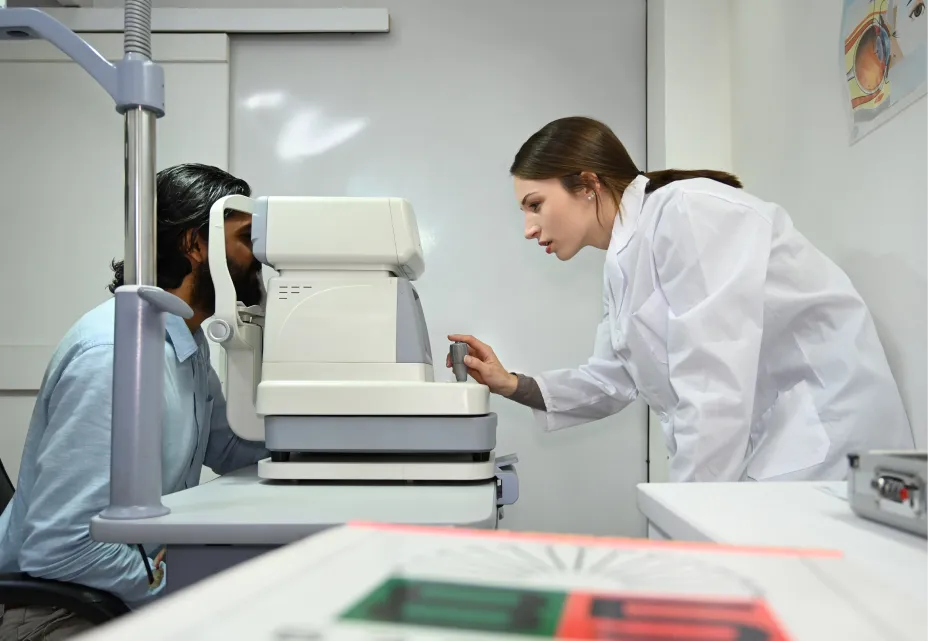
An eye specialist in Lucknow confirms the type in one visit. The exam is painless and includes:
- Visual acuity test: You read letters on a chart to measure your vision.
- Slit-lamp exam: A microscope with a bright light shows the exact location of the clouding.
- Dilated eye exam: Eye drops widen your pupil so the doctor can see the full lens and retina.
The type and stage (early, immature, mature, or hypermature) guide treatment timing.
Cataract Treatment and Your Next Steps
No eye drop, diet, or exercise removes a cataract. In the early stage, new glasses, brighter lighting, and anti-glare lenses help you manage daily tasks. Surgery is the only way to remove a cataract. The surgeon takes out the cloudy lens and places a clear artificial lens, called an intraocular lens (IOL).
Take these steps to protect your vision:
- Baseline eye exam: Get a complete eye exam at age 40, then follow the review schedule your eye doctor sets.
- Yearly diabetes check: If you have diabetes, book a dilated eye exam every year, even when your vision seems clear.
- UV protection: Wear sunglasses with 100% UV protection and a wide-brimmed hat whenever you step out in daylight.
- Tobacco and alcohol: Stop smoking and limit alcohol, because both habits raise your risk of age-related cataracts over time.
- Sugar and pressure control: Keep your blood sugar and blood pressure within your doctor’s targets through diet, exercise, and medicine.
- Eye safety: Wear protective eyewear during sports, welding, grinding, and chemical work to keep your eyes safe from injury.
- Steroid review: Tell your eye doctor about long-term steroid tablets, inhalers, or eye drops so they can monitor your lens.
Screening camps can find cataracts early in people without access to regular eye care.
Conclusion
What are the different types of cataract? Nuclear, cortical, and posterior subcapsular cataracts develop with age. Paediatric, traumatic, radiation, and secondary cataracts follow other causes. Each type affects your sight differently and at its own pace, and surgery restores clear vision in most cases. A dilated eye exam confirms your type and stage in one visit.
At OP Chaudhary Healthcare, Dr. Payal Garg and the ophthalmology team examine your eyes, explain your options, and plan treatment around your daily needs.
Book Your Cataract Consultation in Lucknow
Blurred vision, glare, or frequent changes in your glasses’ power need an expert eye exam. Book a cataract consultation at OP Chaudhary Healthcare, Sector 1, Chaudhary Vihar, Raebareli Road, Lucknow. Call +91-9517164164 or +91-8960-059-575, or book an appointment online.
FAQs
Which type of cataract is the most common?
Nuclear sclerotic cataract is the most common type. It forms in the centre of the lens with age and progresses over several years.
Which type of cataract grows the fastest?
Posterior subcapsular cataract grows the fastest. Vision often declines within months, so you need an early eye exam.
Is it possible to have more than one type of cataract in one eye?
Yes. One eye often shows a mix of nuclear, cortical, and posterior subcapsular changes. Your doctor records each type during the slit-lamp exam.
Do eye drops cure cataracts?
No. No approved eye drop dissolves or removes a cataract. Surgery is the only treatment that removes them.
At what age do cataracts start?
Lens changes begin around age 40. Most people notice symptoms after 60. Diabetes, steroid use, eye injury, and UV exposure bring cataracts on earlier.
Does a cataract return after surgery?
No. The artificial lens stays clear for life. In some people, the membrane behind the lens turns cloudy months or years later. A short laser procedure restores clear vision.